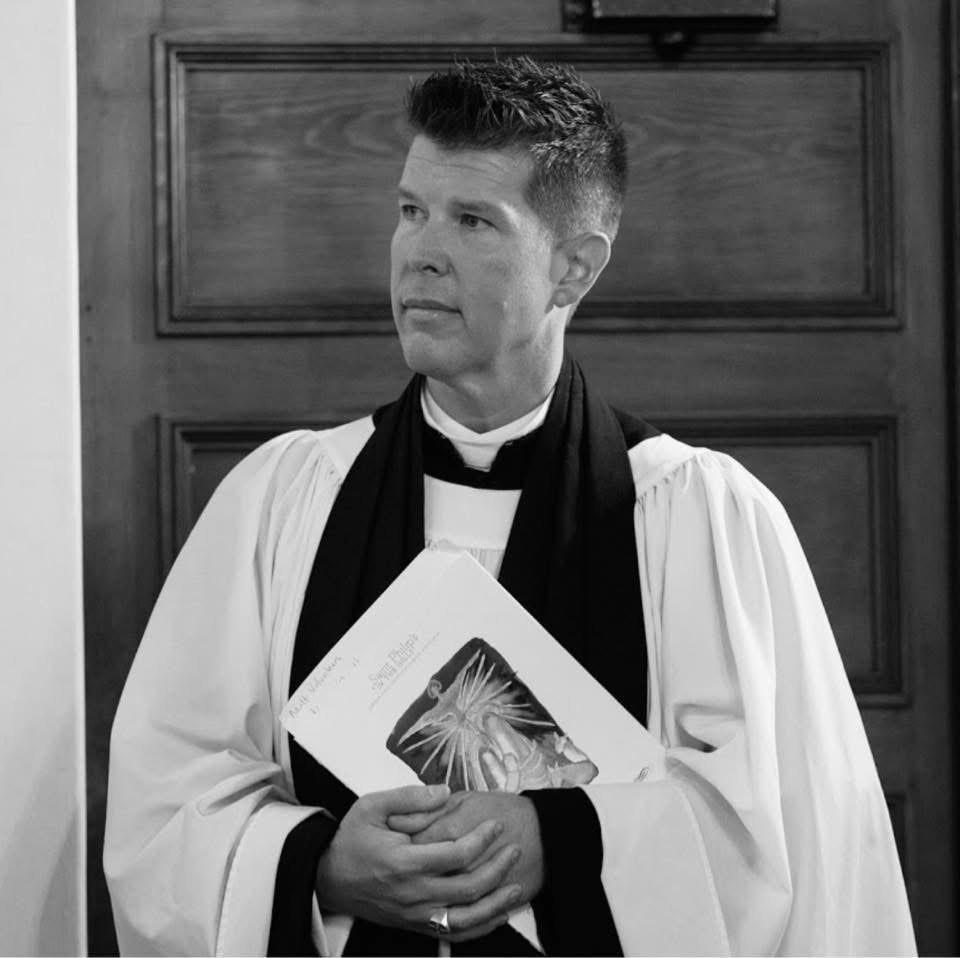
Robert Hendrickson joined Forward Movement in fall 2025 as Chief of Discipleship after 9 years as Rector of St. Philip’s in the Hills in Tucson, AZ. Enabled by a grant from the J.C. Flowers Foundation, Robert and team will focus on transformational discipleship resources to help Episcopalians grow as followers of Jesus. RenewalWorks will be a part of those resources.
In our work with churches, RenewalWorks finds that it can be hard to define what discipleship means and even harder to live it in our everyday lives and our changing world. We hope you enjoy Robert's reflection below.
In every generation of the Church, discipleship raises a question that is both ancient and urgent: What do we do with what we have received?
The temptation of any age is to believe that faith begins with us — that our challenges are unprecedented, our questions entirely new, or our calling disconnected from those who came before. Yet discipleship in the Episcopal Church has never been about inventing a new flame by burning down the past. Instead, it is about receiving a light already kindled and carrying it faithfully into a changing world. We are called to pass the torch, not torch the past.
This vision of discipleship begins with inheritance.
The Church is not merely an institution or a collection of opinions; it is a living hope shaped by prayer, scripture, sacrament, and community across centuries.
When we gather for worship, we step into rhythms older than ourselves. The prayers we pray, the creeds we confess, and the stories we proclaim are echoes of generations who sought to follow Christ in their own turbulent times. Discipleship means recognizing that we stand within a stream that began long before us and will continue long after we are gone.
Inheritance, however, is not the same as nostalgia. To pass the torch is not to freeze the Church in a particular era or cultural moment. The Episcopal tradition has always held together continuity and change through scripture read in community, ancient liturgy spoken in our own language, enduring faith expressed through evolving mission.
Discipleship calls us to carry forward the core work entrusted to us: proclaiming the Kingdom of God, forming followers of Jesus, and embodying Christ’s love in the world. The form may adapt, but the flame remains the same.
Photo by M.T ElGassier on Unsplash
The metaphor of a torch reminds us that faith is both gift and responsibility. A torch does not belong to the one who holds it; it is entrusted for a time. Every generation receives the Gospel as something already alive, already burning with hope. Our task is not to reshape it according to our preferences, nor to hide it from the winds of change, but to bear it with courage. Discipleship in the Episcopal Church therefore asks not, “How do we start over?” but rather, “How do we continue faithfully?”
One of the great strengths of Anglican life is its commitment to holding together the past, present, and future in prayer.
The liturgy itself teaches us this posture. We remember the saints who have gone before, we pray for the needs of the world today, and we anticipate the coming Kingdom that God will bring to completion. This rhythm shapes disciples who are grounded rather than reactive. Disciples live the truth that innovation without memory loses depth, and memory without mission loses purpose.
In times of cultural change, the Church often feels pressure to choose between preservation and transformation. Yet discipleship is not a battle between old and new. It is a faithful stewardship of what has been entrusted to us. The early Christians faced profound shifts such as persecution, expansion into new cultures, debates about identity and yet they did not abandon the apostolic witness.
Instead, they interpreted the Gospel anew while remaining rooted in the teaching they had received.
That same calling remains ours today.
Passing the torch also means honoring the stories and sacrifices of those who came before us. Many Episcopalians inherited faith through grandparents who prayed quietly, mentors who modeled compassion, or communities that gathered faithfully week after week. These witnesses remind us that discipleship is not an abstract idea but a lived practice. To torch the past would be to dismiss these voices, to forget the wisdom embedded in tradition. To pass the torch, however, is to recognize that their faithfulness makes ours possible.
At the same time, discipleship requires courage. Carrying a torch means moving forward, not standing still. The Episcopal Church has long sought to engage the world’s challenges. We've been advocating for justice, welcoming the marginalized, and responding to human suffering with practical compassion. The work we inherit is not only liturgical nor inwardly focused, it is deeply missional.
Proclaiming the Kingdom means stepping into spaces where hope is needed most, trusting that the light we carry is meant to illuminate the path for others.
This balance between continuity and mission becomes especially important when facing uncertainty. Many congregations today wrestle with questions about identity, relevance, and the future. It can be tempting either to cling tightly to familiar forms or to discard them entirely in search of something new.
Yet discipleship invites a different posture. It is one rooted in discernment rather than fear. We ask not what will preserve our comfort, nor what will win cultural approval, but what will faithfully carry forward the Gospel entrusted to us.
The image of passing the torch also speaks to intergenerational discipleship. Faith is not sustained by programs alone but by relationships. Older members of the Church pass on wisdom, stories, and practices that shape younger disciples. Younger members bring fresh energy, new perspectives, and questions that invite deeper reflection. When these generations walk together, the torch burns brighter. Discipleship becomes a shared journey rather than a competition between past and future.
Ultimately, the torch we carry is Christ himself. He is the light that no darkness can overcome.
The Episcopal Church’s sacramental life returns us to this truth. At the Altar, we receive not only Bread and Wine but a reminder that discipleship is a life lived telling a story far larger than our own. We are formed by grace to become bearers of that light in our homes, neighborhoods, and communities. The work we inherit is the work of love: proclaiming good news, healing brokenness, and inviting others into the life of God’s Kingdom.
To say that we pass the torch rather than torch the past is to embrace humility. We are not the first to wrestle with change, nor will we be the last. Our calling is to walk faithfully within the tradition we have received, allowing it to shape us even as we respond creatively to the needs of our time. This posture frees us from both fear and arrogance.
Robert Hendrickson
We do not need to abandon the past to be relevant, nor do we need to resist the future to remain faithful.
As disciples in the Episcopal Church, we stand at a crossroads where memory and mission meet. The light we carry has been passed through countless hands — saints known and unknown, communities thriving and struggling, generations seeking to follow Christ with integrity. Our task is to hold that light with reverence, to nurture it through prayer and practice, and to offer it to those who will come after us.
In the end, discipleship is not about preserving an institution or winning a cultural argument. It is about faithfulness to the Kingdom of God that transcends every era. When we pass the torch, we affirm that the Gospel is alive — not trapped in the past, but rooted in it, guiding us forward. And as we walk together in that light, we discover that the work we have inherited is not a burden but a gift: the ongoing proclamation of hope in a world that still longs to see the flame.